 French author Marguerite Yourcenar was once asked what love is. “Aimer, c’est subir”, she answered: to love is to willingly endure another person. To surrender to them. Which is only to say, really, that love requires making oneself vulnerable, except that Yourcenar is reminding us, through the idea of submission, that vulnerability is much more than a fashionable word: it literally means exposing oneself to harm.

Phantom Thread seems to deeply agree. The male protagonist, Reynolds (Day-Lewis is masterful in this role), is only able to experience love when he is severely weakened by his companion, Alma (played with abandon by Vicky Krieps). There’s an echo of Samson and Delilah here, though the moral of the story, if there is one, is different. Samson gives Delilah the secret to his power — makes himself utterly vulnerable out of love for her — and is betrayed as a result, the lesson being, it seems, that you’d better be careful whom you open up to. Meanwhile Reynolds, in Phantom Thread, is a walking defense mechanism, and only gets coaxed into vulnerability when experiencing exhaustion, or through criminal subterfuge. But when we see him in that state of vulnerability, we see that the love he is able to experience is what is dearly missing from the rest of his life.
Is it true that “aimer, c’est subir”? For as long as I can remember, I’ve had in mind the possibility of love without this kind of surrender. Is it not possible for two people to be enriched by each other’s company, but entirely on each one’s terms? Rilke wrote about this in Letters to a Young Poet, back in 1904:
[The emancipation of women] will (at first much against the will of the out-stripped men) change the love-experience, which is now full of error [because of the power differential between men and women], will alter it from the ground up, reshape it into a relation that is meant to be of one human being to another, no longer of man to woman. And this more human love […] will resemble that which we are preparing with struggle and toil, the love that consists in this, that two solitudes protect and border and salute each other.
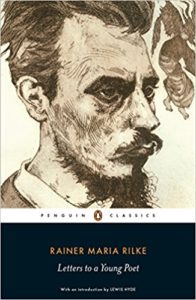 Rilke is a fierce advocate for solitude, by which he means a person’s inner core, their center. For him, love as practiced by most people, especially when they’re young, in which this solitude is given up, and each person loses their sense of self as they meld into the other (what we might call co-dependence today) is not true love. True love is two solitudes that protect, border and salute each other. When I came across these words in my late teens, I felt an immediate pang of recognition. No, I thought, I don’t want to surrender to being harmed by the person I love; I want to sit firmly in my center and sit across the table from someone who is also sitting in hers, and each be made better by the other.
To which possibility Phantom Thread replies: No Way, Jose. To sit firmly in your center, as does Reynolds, whose life is a tangle of rituals and rules designed to protect him, is to be fundamentally alone. How did protecting one’s solitude work out for Rilke, anyway? From a piece about him in The Atlantic:
Rilke could not love or be loved for long, except in the absence of the beloved. After a passionate affair with the brilliant and beautiful Lou Andreas-Salomé, Rilke’s muse and cicerone on his Russian trips, he suffered pangs of rejection and then happily settled into a lifelong correspondence with her. He married the sculptress Clara Westhoff when he was twenty-five, lived with her and their child for a year, and then by agreement left to take up his pilgrimage again. Through periodic reunions, but mostly through a voluminous and extraordinary correspondence, they maintained what Rilke called an “interior marriage,” until emotional reality banged louder and louder on their youthful experiment and they eventually grew estranged.
Rilke himself writes in Letters to a Young Poet that “we are unutterably alone”, as if it were an unalterable fact of existence. Phantom Thread argues that this doesn’t have to be the case, and that the way out is to let the other knock us off our center, to submit. Which isn’t exactly news — we’re constantly being told that we need to open up, to make ourselves vulnerable — but the film uses such a visceral metaphor for this, and brings it about in such a surprising way, that it made me want to reconsider this all over again. After all, fatherhood notwithstanding, my love life hasn’t been all that different from Rilke’s: I’ve never had a relationship longer than three years.
At the end of the day — and this may be what Phantom Thread is all about —, the difficulty has to do above all with being an artist, because you just can’t be an artist, really, without standing firmly in your center. There are of course great artists who sustained healthy, long relationships, but it’s not exactly the norm. Many serious artists, it would seem, tend not to want to submit to or endure the slightest thing from others, lest it should interfere with their work. So where does that leave us? The neutrality of Phantom Thread is admirable on this point. While Reynolds really does seem happier in the brief moments when he is vulnerable — moments that seem like small spiritual awakenings for him — the film seems to leave the question open as to whether making oneself vulnerable is, overall, a good idea. It seems to be just one possible path among others.
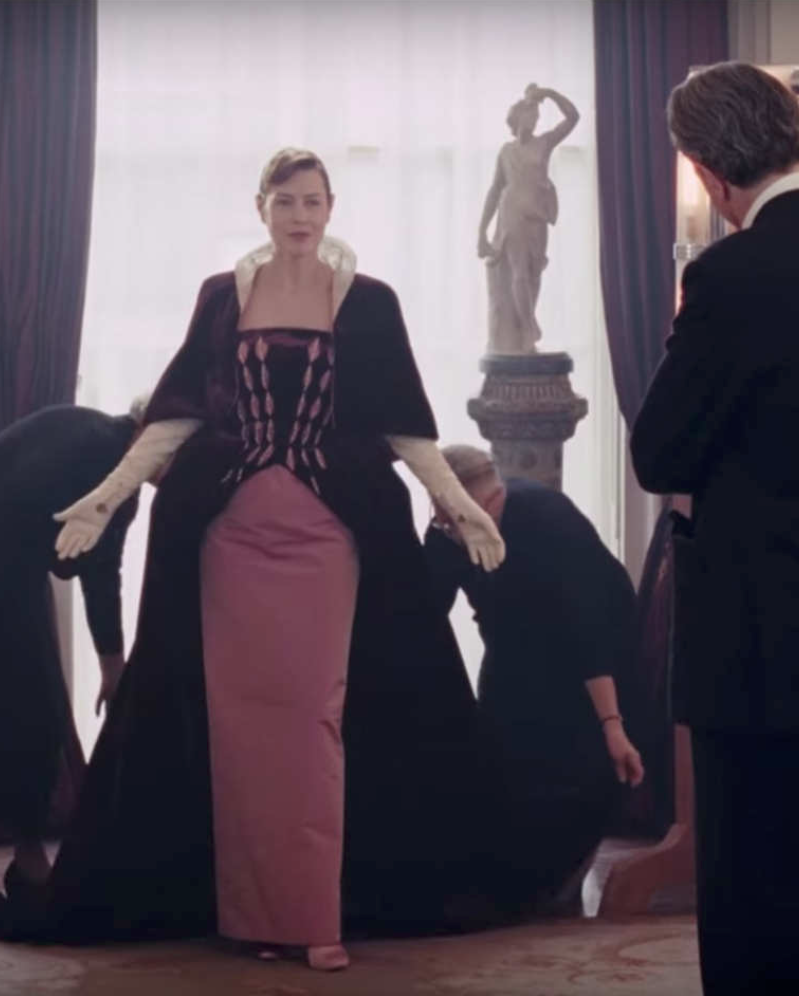 Perhaps there is an answer, however, in Reynolds’ work itself. I’m no expert on fashion, but his dresses look uninspired to me. At no point do they look truly stunning except, perhaps, when worn by Alma when he is falling in love with her. And if there’s one thing Hollywood knows how to do, it’s how to make clothes look good when it wants to. Unless I’m missing something, there’s a dark joke at the core of the movie: the precious work that Reynolds gives everything up for, the work that has guided his whole life and given it meaning, is in the end banal and trivial. He’s nothing but a charmer who dresses up rich ladies. And for this he fiercely guards his solitude. For this he is fundamentally alone. For this he closes himself off to the possibility of love. It doesn’t really seem worth it, does it?
It could be argued that Reynolds does have love in his life, in the form of his relationship with his sister, Cyril. They are partners, and do stand by each other, in a way. But in fact, she’s even less vulnerable than he is, has erected even more formidable defenses around herself, as we see when she shuts down a possible altercation with Reynolds in the most verbally violent way: “don’t pick a fight with me. You most certainly won’t come out alive.” Both siblings’ lives are fundamentally lacking in vulnerability, and they’re both deeply alone as a result. Vulnerability may also be what’s lacking from Reynolds’ work, but Phantom Thread doesn’t make too fine a point of it: it isn’t as if his dresses suddenly get better once he opens up to Alma. This isn’t a redemption story, and vulnerability is no cure-all.
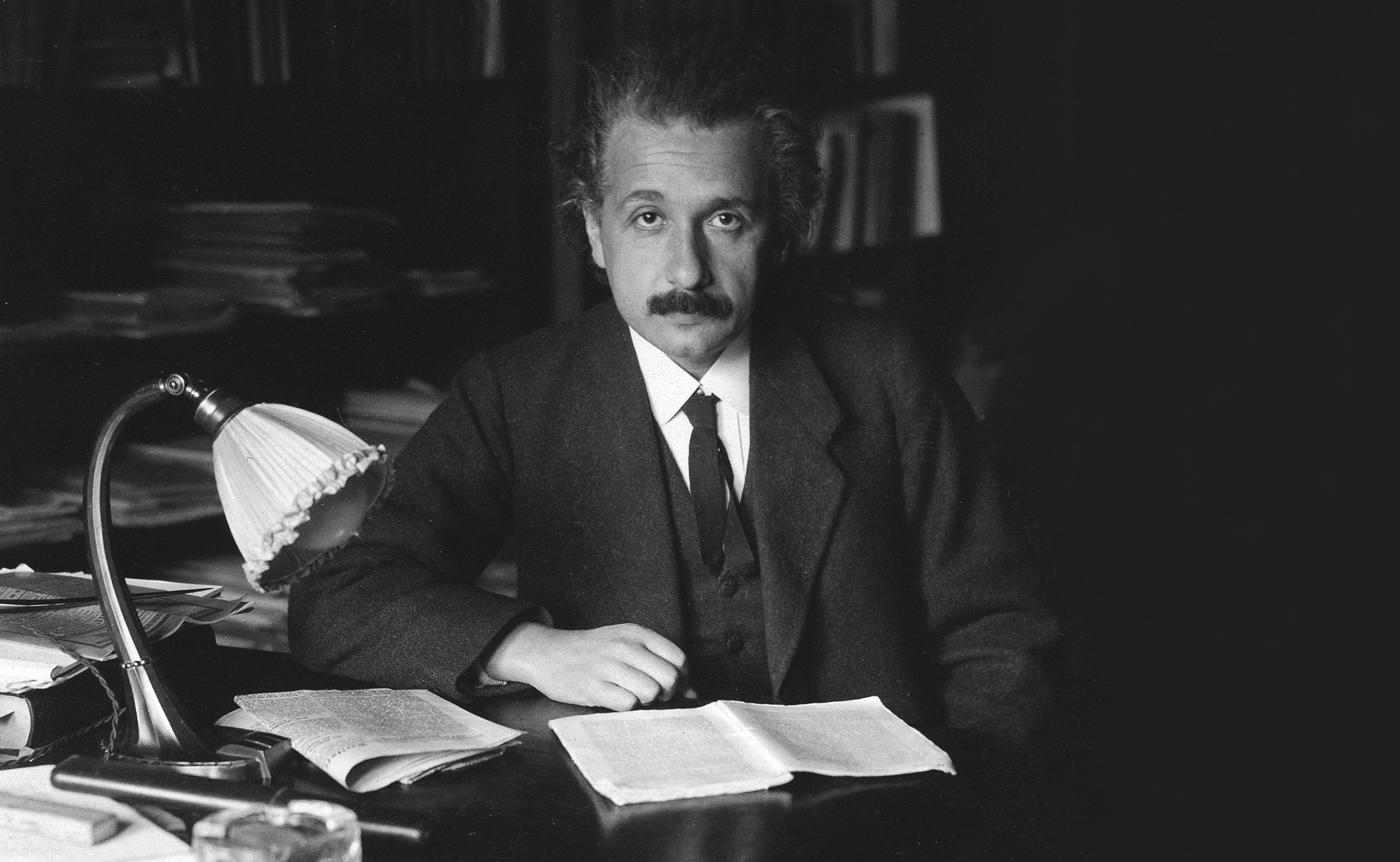 Co-incidentally, I just finished Walter Isaacson’s biography of Einstein, which is fantastic (he manages to give it both breadth and depth while keeping it delightfully readable). Of Einstein’s love life, he writes:
Einstein’s desire for detachment was reflected in his extramarital relationships. As long as women did not make any claims on him and he felt free to approach them or not according to his own moods, he was able to sustain a romance. But the fear that he might have to surrender some of his independence led him to erect a shield.
This is a state that Einstein reached later in life, in his thirties, after he divorced his first wife. He wasn’t always like this. While he was doing most of the surpassingly brilliant work that eventually made him famous — in the years around 1905 — he was in a tumultuous relationship with Mileva Marić, his first wife, also a physicist. They divorced in 1919, four years after he published his magnum opus, the General Theory of Relativity. Clearly the difficulties of that relationship didn’t hamper his work; quite the contrary. What if it were precisely the barriers that he erected around himself after the end of his first marriage that kept him from producing anything of much scientific value thereafter? That’s surely a myopic view of the many factors, age being a major one, that would contribute to this creative decline. But going back to Phantom Thread, perhaps Reynold’s deep fear around vulnerability could have been alleviated if he had been told that Einstein did his best work when his emotional barriers were are their lowest.